
Finding Fort Worth Resident Records
Fort Worth has no one public roll of every household. The useful trail depends on the question. The Tarrant Appraisal District starts an address or owner search with a parcel, while the County Clerk connects a recorded owner to deeds, plats, liens, and other instruments. The voter lookup confirms a registration for a known person or address and supplies precinct context. For earlier households, city directories, newspapers, census images, and archive ledgers supply the time layer that a current portal cannot.
Keep each role separate. An assessed owner may receive mail elsewhere. A deed identifies parties to a transaction, not every occupant. A directory records what its publisher captured in one year. Using two or three independent anchors, such as address, time, spouse, occupation, or instrument number, avoids attaching a common name to the wrong Fort Worth resident.
- Search the property roll with a name or street address, then record the account, situs address, legal description, and owner label.
- Check the County Clerk’s official-record index for the instrument number, grantor, grantee, recorded date, or subdivision.
- Use the Tarrant voter confirmation route only for the registration, precinct, and district question it can answer.
- For a past Fort Worth household, match a directory year to census, newspaper, probate, or parcel evidence.
- When the record is not online, ask the custodian for an existing record with a date range, department, and address, instrument, or case number.
Fort Worth Resident Records Custodians
The county offices are distinct even when a search starts in Fort Worth. The Tarrant County Clerk keeps recorded real-estate instruments and county-level vital, probate, and other services. TAD administers the appraisal roll. Elections maintains the registration tools and lists. The City’s address tools add permit and code history inside city limits. The Fort Worth street directory explains the deeper parcel-by-parcel sequence.
Tarrant County Clerk
100 W. Weatherford St., Suite 130
Fort Worth, TX
817-884-1195
Tarrant Appraisal District
2500 Handley-Ederville Road
Fort Worth, TX
817-284-0024
Tarrant County Elections
2700 Premier St.
Fort Worth, TX 76111
817-831-8683
Fort Worth Parcels Lead the Search
Tarrant Appraisal District’s property search is the best first stop when an address or owner name is known. Its public search offers Residential, Commercial, Mineral, and Personal Property categories with one free-text field. A result can display an account number, geo reference, property address and city, primary owner, and market value. Expanded results add the owner mailing address, legal description, subdivision, instrument, map links, assessment fields, and recent document links.
A situs address is the physical parcel location. The owner address is where assessment mail goes, so it may be a PO box or another city. That distinction is especially important when looking for Fort Worth residents rather than merely documenting ownership. Follow an instrument to the Clerk’s index before treating an appraisal result as a transfer record.
| TAD field or control | How it helps |
|---|---|
| Property type selector | Limits a free-text search to Residential, Commercial, Mineral, or Personal Property. |
| Account and geo reference | Preserves the parcel’s follow-up identifiers. |
| Property and owner address | Separates the physical situs from the assessment mailing address. |
| Legal description and instrument | Connects a parcel to deeds, plats, subdivisions, and the official record index. |
See the TAD search interface before entering a Fort Worth address.
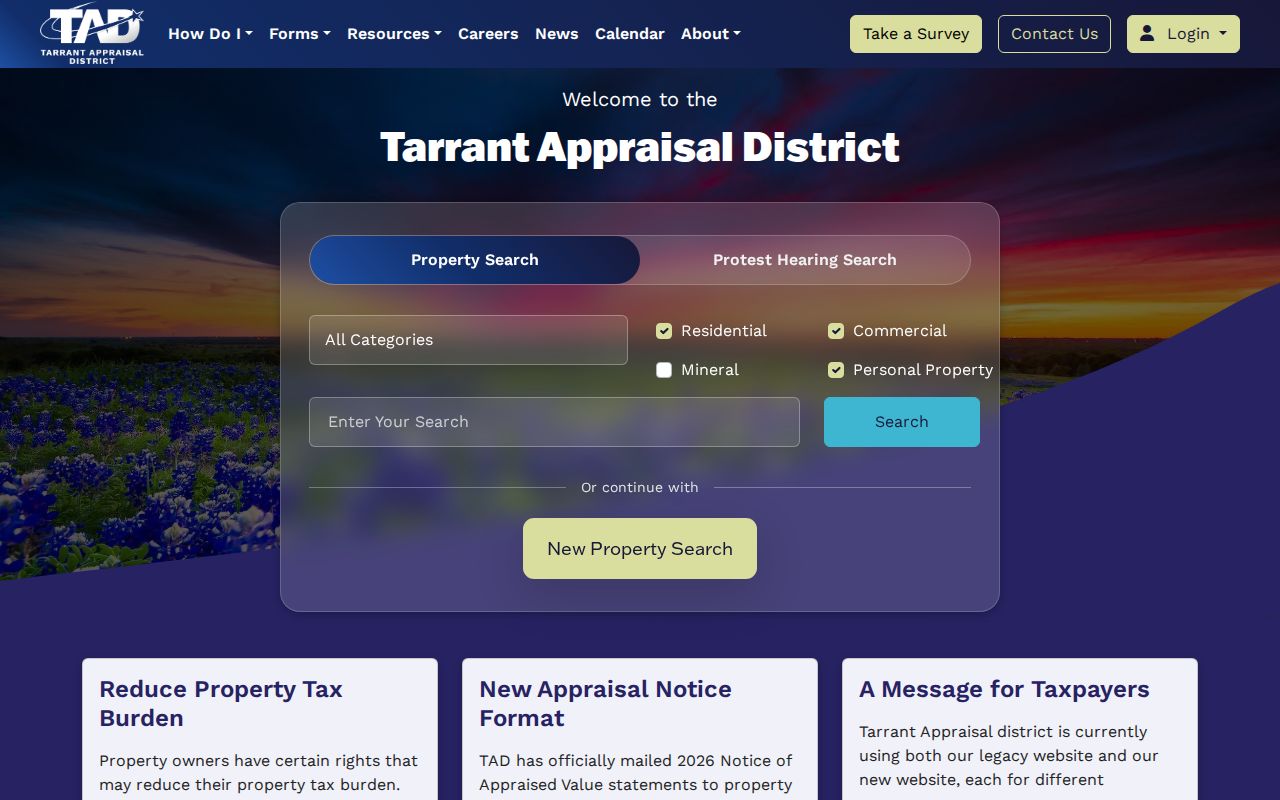
The search screen illustrates why the appraisal roll is a strong address starting point but not a household roster.
Fort Worth Deeds and Recorded Names
The County Clerk’s Official Records Search provides Quick Search and Advanced Search modes for real-property records. Its search term accepts a grantor, grantee, subdivision, document type, or document number. Date fields can be paired with recorded-date shortcuts. Search Index Only treats multiple words individually, while Search Index & Full Text uses document OCR and treats multiple words as a phrase.
A grantor transfers an interest, and a grantee receives one. Those indexed roles create a dated property trail, not a conclusion that a named person lived at the parcel. The accessible portal does not state its earliest online coverage. The Clerk says historic document images are still being converted, and directs missing-image questions to the Central Library at 817-884-1069.
- Roll
- A government-maintained list for a defined purpose, such as assessment or registration.
- Index
- A search aid that points to a recorded item; it is not automatically the full document image.
- Parcel
- A mapped property unit tied to an account and legal description.
- Criss-cross directory
- A historical directory arranged by street and house number instead of by personal name.
Current Fort Worth Resident Sources
Current records answer narrow questions well. The appraisal roll identifies an assessed owner and parcel. Recorded instruments identify property parties. The voter tool confirms a registration and political geography. Court, business, and state registry systems each have their own scope and limits. A valid Fort Worth result should keep the record type, date, and custodian visible rather than blending unlike sources into one profile.
| Current source | What it can establish | Custodian | Access path |
|---|---|---|---|
| TAD appraisal roll | Assessed owner, parcel, situs, mailing field, and value | Tarrant Appraisal District | Free property search |
| Official records index | Recorded grantor, grantee, instrument, and legal description | Tarrant County Clerk | Search portal and Clerk copy route |
| Voter confirmation | Registration status, address, precinct, and districts | Tarrant County Elections | Lookup or records-request route |
| County and district court systems | Parties, case identifiers, filings, and dispositions where public | County Clerk and District Clerk | Odyssey, DCSA, terminals, and copy services |
| City neighborhood registry | Publicly registered community organization context | Fort Worth Community Support | Registry and OneAddress route |
When the task is to verify one person, compare the named record against another time-bounded source rather than treating any single result as final. The Fort Worth resident lookup gives that name-to-record sequence in more detail.
Fort Worth Voter Records Have Boundaries
Tarrant County Voter Lookup accepts last name, first name, date of birth in month/day/year format, or a State Voter ID. A returned card may show the voter’s name, address, status, State and County Voter IDs, precinct, elected districts, and an election-history control. Address, ZIP, and location modes can also help identify district geography.
The lookup is a confirmation tool, not a public street-by-street census. It does not establish every occupant, continuous residence, or a household relationship. Texas Election Code §13.004 protects fields including Social Security, driver-license or DPS ID, phone, and certain residential-address information. Election Code §§18.008 through .010 govern furnished lists, so the Elections Department is the proper contact for a formal list request and current reproduction terms.
Fort Worth Court and Registry Checks
Court records are another separate layer. Tarrant County Odyssey Public Access is the entry point for county courts at law, probate, and justice courts, while the District Clerk maintains separate public access and onsite document routes. Statewide re:SearchTX can help locate participating court data, but the court that maintains the record remains the authority.
Capture case number, court, party role, filing date, status, hearing or register entries, and document availability. A name match alone is weak. Sealed, juvenile, expunged, adoption, and other protected cases can be absent or redacted. District Clerk self-service terminals are free onsite; its published schedule lists a clerk search and distinct paper, electronic, and certification copy charges.
The county court search entry is shown here as an official starting point.
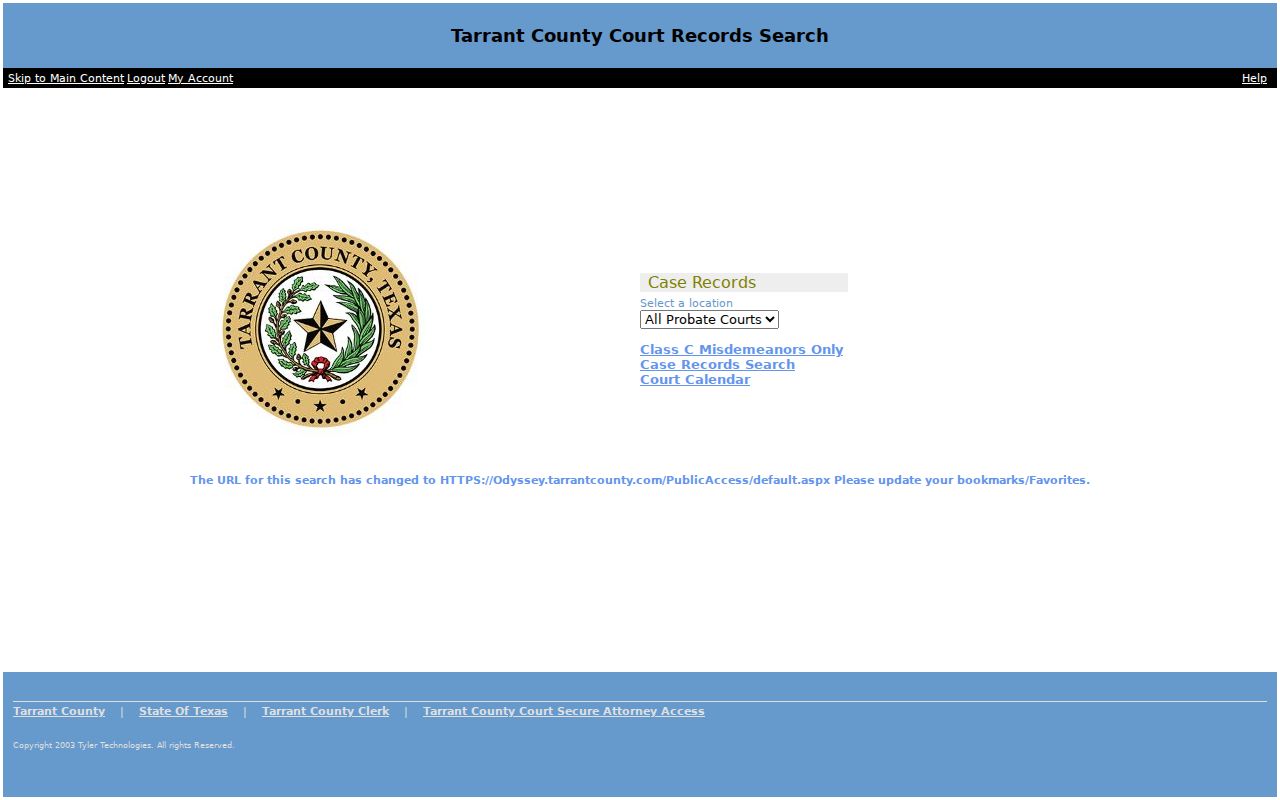
The interface is useful for locating a case system, but a public docket does not verify a current Fort Worth address.
For a custody or statutory registry question, use the appropriate official system and record the retrieval date. Texas DPS’s public registry excludes several sensitive fields, and a result is not a general criminal-history report.
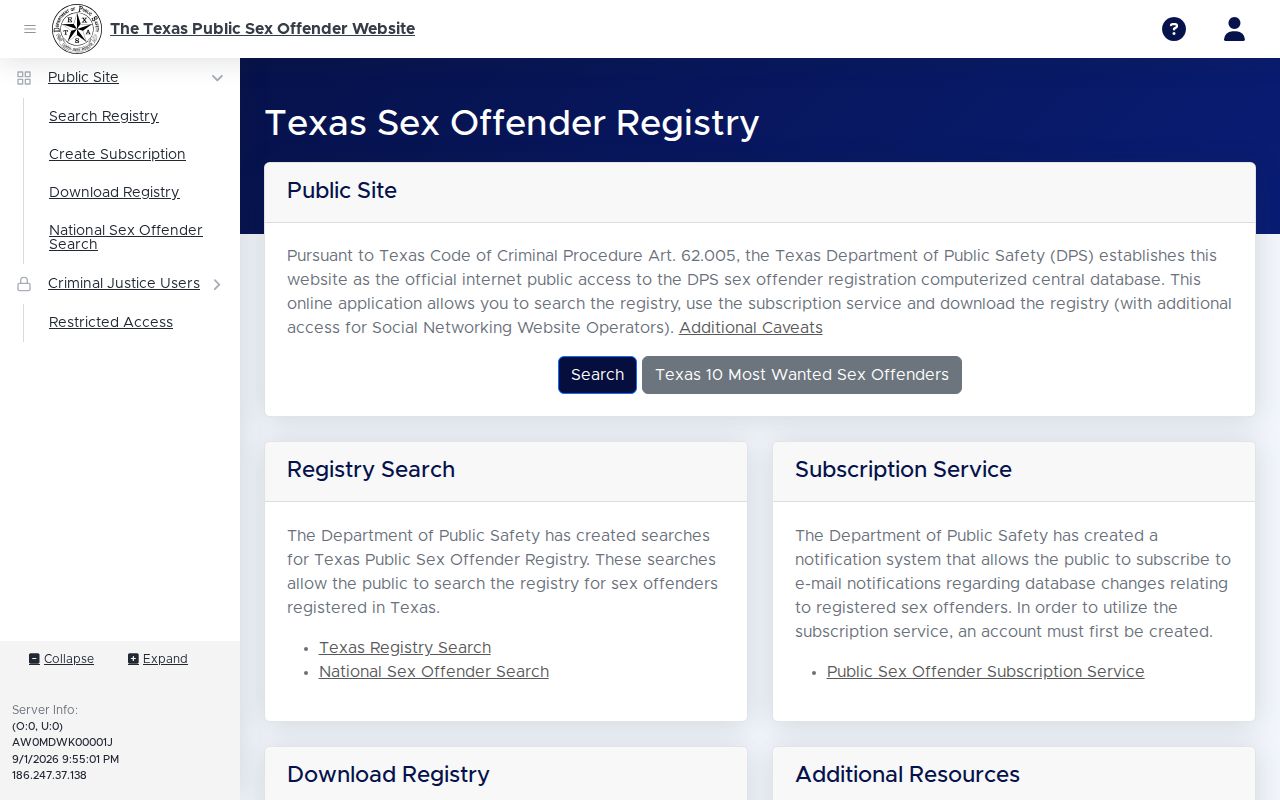
Official status systems change, so any result needs the system’s own date and scope rather than an inference about a person’s present circumstances.
Texas Requests Fill Fort Worth Gaps
When an online search ends, the Texas Public Information Act, Texas Government Code Chapter 552, provides a route to request an existing county or city record. Describe the department, record type, date range, address, instrument number, or case number. The law does not require a custodian to answer a question or create a new compilation. It presumes information available unless an exception applies.
Tarrant County accepts requests through its online process as well as email, mail, fax, and in-person channels. The county says it will produce information promptly or provide a reasonable availability date when it cannot do so within ten working days. A cost estimate can require a response. Fort Worth’s city process likewise accepts an existing-record request, and may require a deposit or prepayment for a larger estimate.
Review the Tarrant County PIA procedures before choosing a delivery channel.
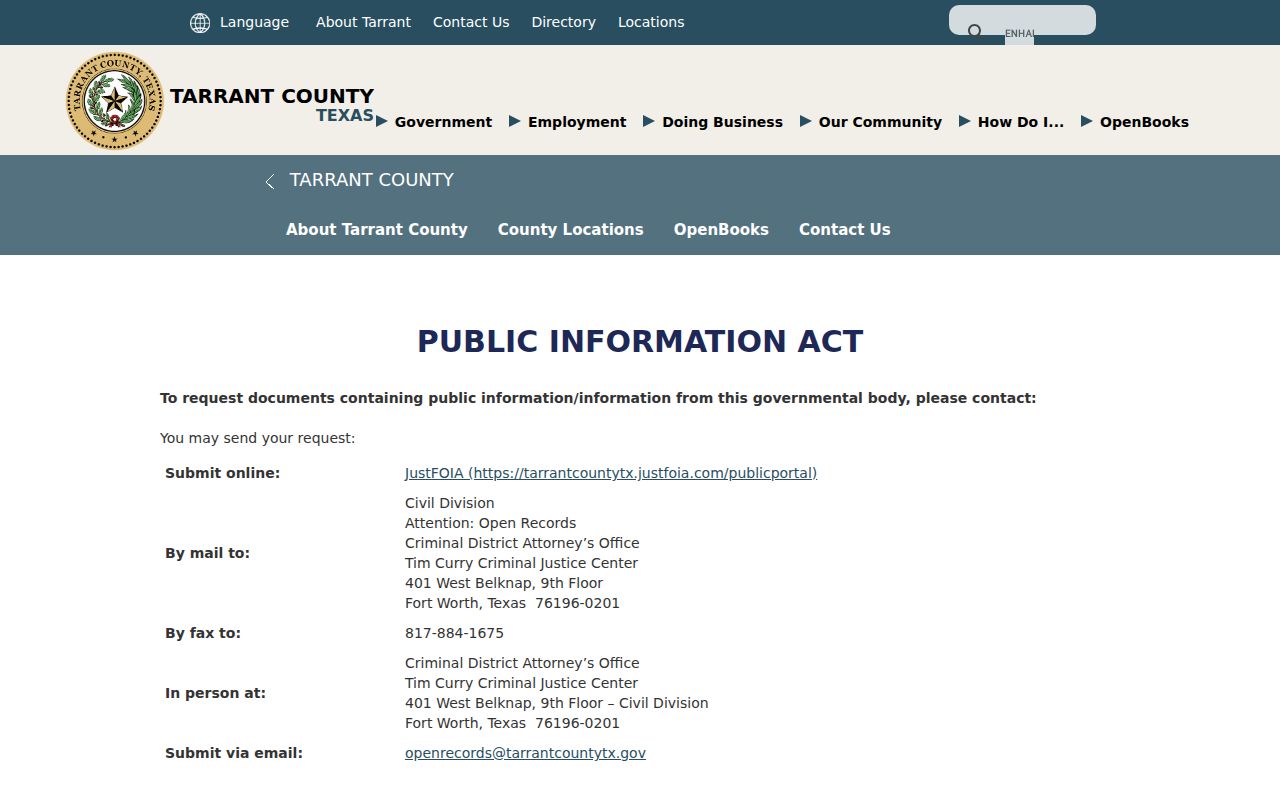
The county’s request page reinforces the practical point: name the existing record and custodian instead of asking for a newly created resident list.
Historical Fort Worth Resident Directories
The Texas State Library identifies Fort Worth directories from 1877 through 1989 with gaps, while local repositories hold later runs, telephone material, and criss-cross volumes. A city directory can record a name, address, occupation, employer, telephone, or household abbreviation for its publication year. It cannot prove that a person remained there before or after that edition. The full collection and reading method belongs on the Fort Worth city directory page.
The Fort Worth History Center at 501 E. Bolt Street combines municipal archives, local newspapers, maps, yearbooks, and research help. Its local-history collection reports more than 40,000 volumes, about 9,500 microfilm rolls, and 180,000 microfiche. Archives may be offsite, so a catalog check and appointment are sensible before a trip.
Fort Worth’s 1876 Records Break
On March 29, 1876, a Tarrant County courthouse fire destroyed most early county records. Some probate material survived, and later ledgers, re-recorded instruments, newspapers, and archive collections can bridge parts of the gap. A missing early deed, probate file, or court record may reflect that event instead of proving a person had no connection to Fort Worth.
Tarrant County Archives preserves research leads that include land, property, election, marriage, naturalization, school, and probate material. Its historic ledger runs are especially useful when a directory name needs a second local source. Cite the volume, page, date, and the difference between an original record and a later abstract.
Fort Worth Property Alerts and Scams
The Tarrant County Clerk’s Property Fraud Alert is a free, exact-name monitoring service. It can send email or telephone alerts when that name appears as grantor or grantee across more than 90 document types. It is a useful prompt to inspect a recorded instrument, not fraud prevention or a title opinion. A recorded alert should be checked against the County Clerk’s official index and the document itself.
Use published county or city contact details when a mailer, caller, or payment request claims to involve a deed, court matter, permit, or jury duty. Tarrant County and Fort Worth both provide official request channels. Saving the instrument number, sender, and date can help an office identify a misleading solicitation without repeating personal details.
Fort Worth Vital Records for Family Research
For a documented family link, the Tarrant County Clerk is the practical local route for county birth, death, marriage, and related records, while Texas DSHS maintains statewide index and certificate services. A certificate and an index do different work. The DSHS digital birth index begins with event year 1925, and its death index begins with 1965. Earlier microfiche index material begins in 1903. An index row can help identify a date and county, but it is not a certified record and does not override access requirements.
Texas keeps birth records confidential for 75 years and death records confidential for 25 years under Government Code §552.115. The local application requires the record type, event details, a requestor relationship or reason, identification, and, for some requests, a sworn statement. Tarrant’s form lists in-person, mail, and VitalChek routes. For a mailed request, it directs the applicant to include photo identification, a sworn statement, payment, and a self-addressed stamped envelope. A local registrar can have different coverage from the county, so Arlington births or deaths after 1971 and Grapevine records after 1973 require checking those city halls.
Use a vital record to confirm the event it documents, then compare it with a directory, probate file, cemetery record, newspaper notice, or parcel trail. The Texas DSHS index guidance explains the digital and microfiche starting points, and the Tarrant County Clerk vital-record page explains local access requirements.
Fort Worth Privacy and Safer Research
Texas address confidentiality, protected voter-address rules, court seals, vital-record confidentiality, and federal driver-record limits mean an absent field is sometimes deliberate. Birth records remain confidential for 75 years and death records for 25 years under Texas Government Code §552.115. The Texas Address Confidentiality Program provides an alternate-address path for eligible participants.
Official sources and commercial directory products differ in purpose. An official source identifies its custodian, record type, and access limits. A commercial category can combine old or mismatched data without explaining its provenance. For a defensible Fort Worth result, save the source URL, exact field, date range, and retrieval date, then ask the custodian to correct a factual error.
| Official record route | Commercial directory category |
|---|---|
| Identifies a custodian, record type, date, and request route. | May combine data of unclear age or provenance. |
| Supports confirmation against an original office record. | Can be treated only as a lead that requires independent checking. |